Free shipping on all orders $200+

Cart
0
Introduction
When browsing for watches, newcomers and even experienced collectors often encounter a bewildering price gap: a microbrand watch may cost $100–$500, while a luxury Swiss timepiece can easily reach $5,000–$50,000. At first glance, the difference may seem like a matter of prestige, but what are you truly paying for?
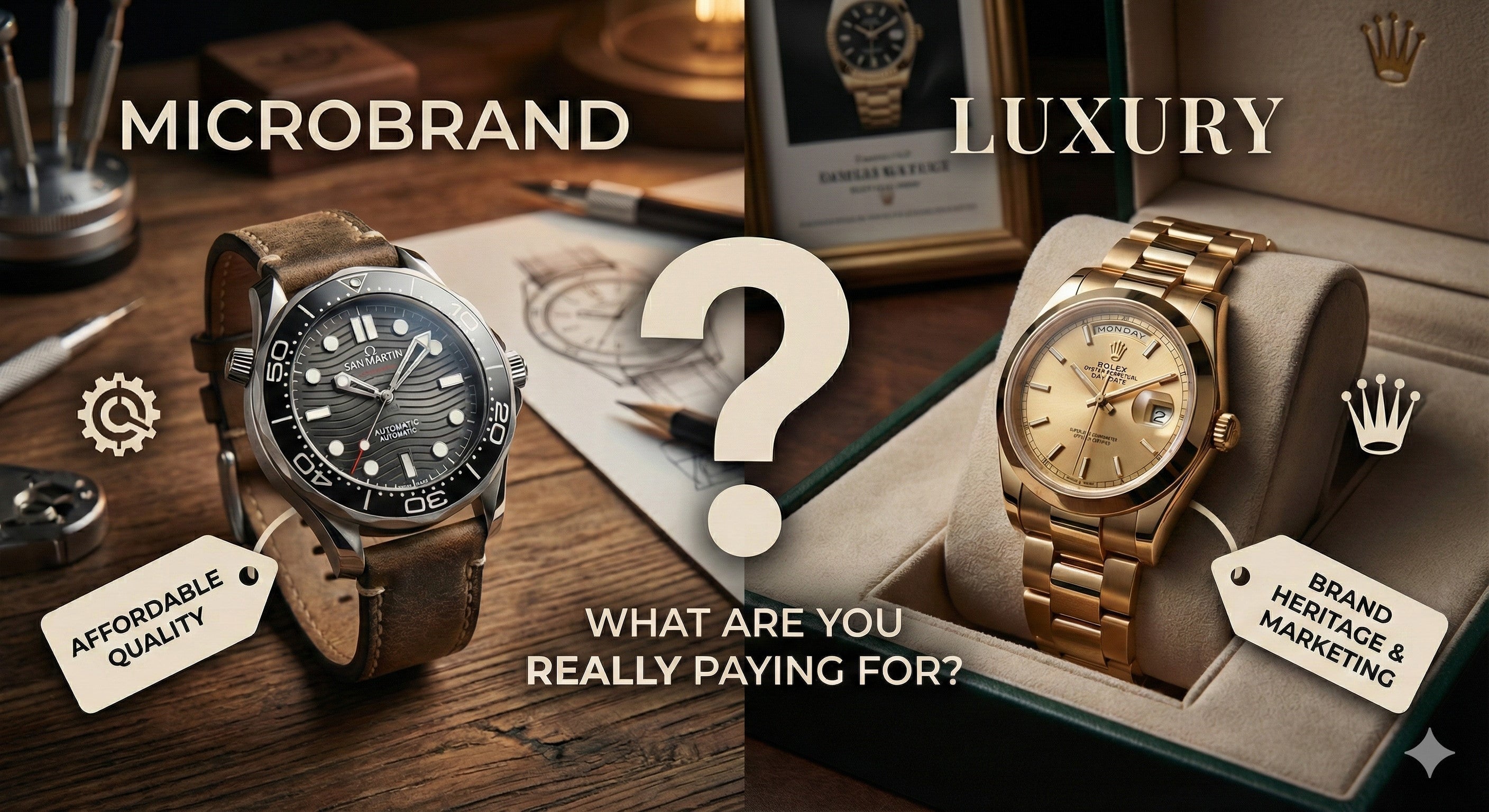
In 2026, the line between microbrands and luxury watches has blurred. Microbrands leverage direct-to-consumer sales, efficient Asian manufacturing, and modern materials to offer high-quality timepieces at previously impossible prices. Meanwhile, luxury watches maintain heritage, exclusivity, and brand-driven value.
This guide explores the real cost drivers, what you get with each category, and how to decide which type of watch fits your goals and lifestyle.
1. Understanding Watch Pricing
Luxury watch prices are rarely about raw materials alone. They include:
- Brand heritage and prestige: Iconic brands like Rolex, Omega, and Patek Philippe charge for decades or centuries of history. Ownership communicates social status.
- Marketing and sponsorship: Celebrities, sports partnerships, and glossy advertisements often account for a significant portion of MSRP.
- Exclusivity and scarcity: Limited editions, rare complications, and long waiting lists create perceived value.
- Retail markups: Authorized dealers typically take 30–40% margins, inflating prices further.
Microbrands, on the other hand:
- Sell direct-to-consumer via online platforms
- Minimize advertising budgets through social media, influencer collaborations, and community engagement
- Produce small batch runs for better quality control
- Offer transparent specs (movement, water resistance, crystal, case material) without inflated branding costs
Essentially, microbrands focus on tangible value over prestige.
2. Comparing Core Components
To understand what you’re paying for, it’s important to examine the core watch components:
Movement
|
Feature |
Microbrand |
Luxury |
|
Type |
Japanese Miyota/NH35/PT5000 or Swiss ETA 2824 clones |
Swiss in-house (Rolex, Omega) |
|
Accuracy |
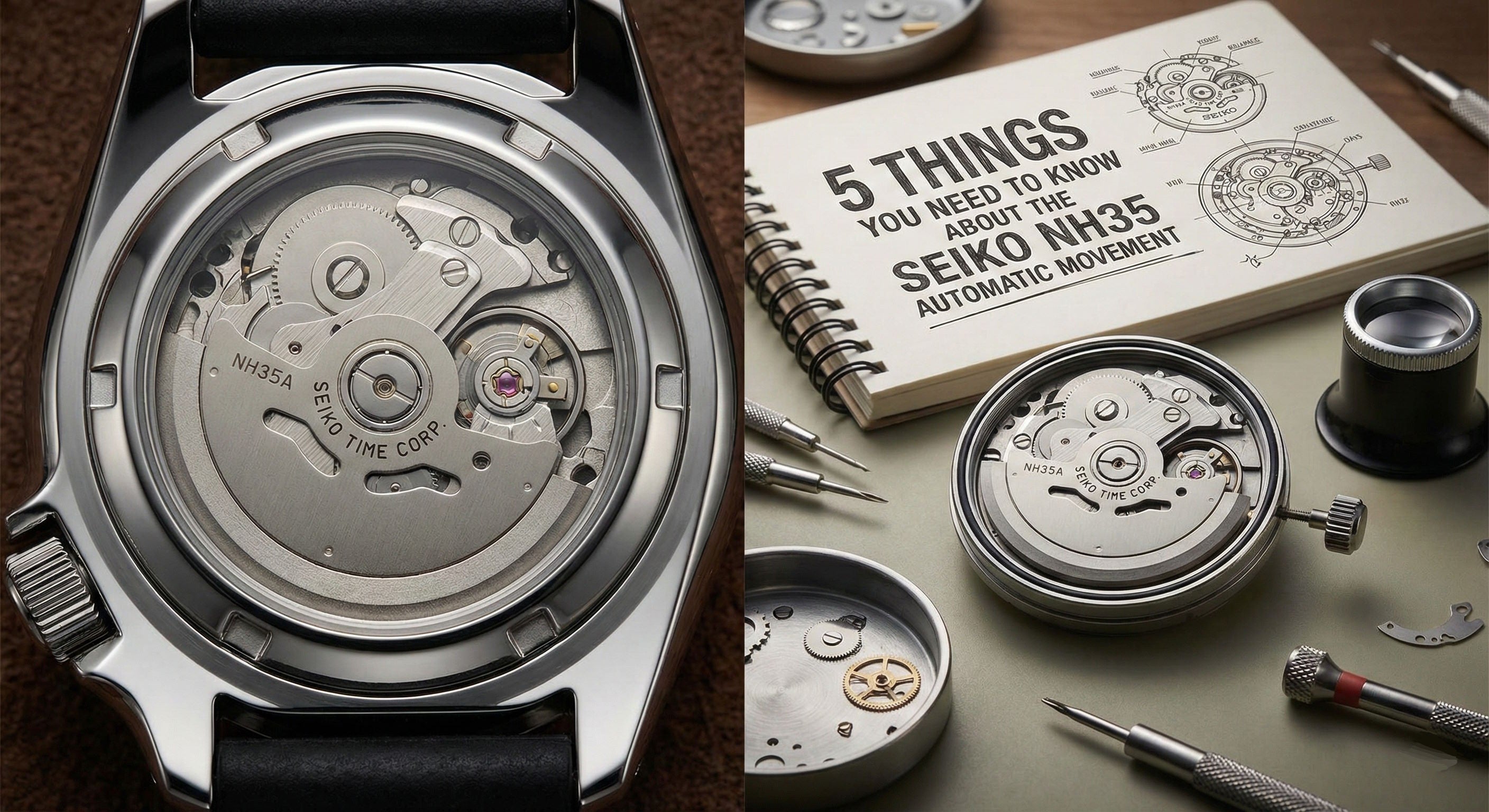
±10–20 sec/day (SEIKO NH35 Movement) |
±2–5 sec/day (COSC) |
|
Serviceability |
Affordable, widely available |
Expensive, specialized |
|
Long-term durability |
Reliable |
Exceptional but costly to service |
Insight: Microbrands offer excellent functional movements for the price. Luxury movements may be more refined, but the average owner rarely notices minor differences unless tracking precise chronometry.
Case & Materials
- Luxury: High-grade stainless steel (904L in Rolex), gold, platinum, titanium, ceramic inserts, exotic straps. Flawless finishing.
- Microbrand: Solid 316L stainless steel, sapphire or mineral crystal, occasionally ceramic or PVD coatings. Finishing is improving rapidly.
Insight: Microbrands now offer materials and build quality that rival entry-level luxury watches, especially in terms of stainless steel, sapphire crystals, and water resistance.
Crystal
- Luxury: Usually sapphire with anti-reflective coating; some include double AR.
- Microbrand: Many now include sapphire, even under $200. Mineral is common for ultra-budget models.
- Acrylic: Vintage-style watches in both segments.
Insight: For daily wear, microbrands with sapphire are indistinguishable from luxury pieces.
Lume and Dial Details
Luxury watches often use BGW9, Super-LumiNova, or proprietary luminous materials. Microbrands now replicate these applications with high-grade lume and applied indices, rivalling the visual appeal of luxury at a fraction of the price.
Water Resistance
- Luxury: Often rated 100–300m for dress or diver watches; some extreme divers go deeper.
- Microbrand: Entry-level divers now offer 100–300m; many even surpass luxury baseline water resistance without cost inflation.
3. Design & Style
Luxury brands leverage iconic designs, patented shapes, and proprietary materials. They may also employ in-house dial makers, engravers, and gem-setters.
Microbrands focus on:
- Homages of classic designs
- Creative, original designs for niche enthusiasts
- Heritage-inspired pieces without inflated pricing
Key takeaway: Microbrands provide excellent design quality; some even outperform luxury watches in originality or personalization, especially for collectors who prefer smaller, unique runs.
4. Resale & Investment Value
- Luxury: Certain models appreciate (Rolex Submariner, Patek Philippe Nautilus). Resale and investment value can justify the initial high cost.
- Microbrands: Limited resale value; focus is on utility, style, and affordability. Most microbrands are consumer watches, not investments.
Insight: Buy luxury if your goal is status or investment. Buy microbrands for daily enjoyment, reliable mechanics, and style on a budget.
5. Marketing and Brand Premium
Luxury pricing heavily incorporates brand equity. Microbrands rely on:
- Social media, micro-influencers, and watch forums
- Transparent communication of specs and pricing
- Community-driven hype (Reddit, Discord, Instagram)
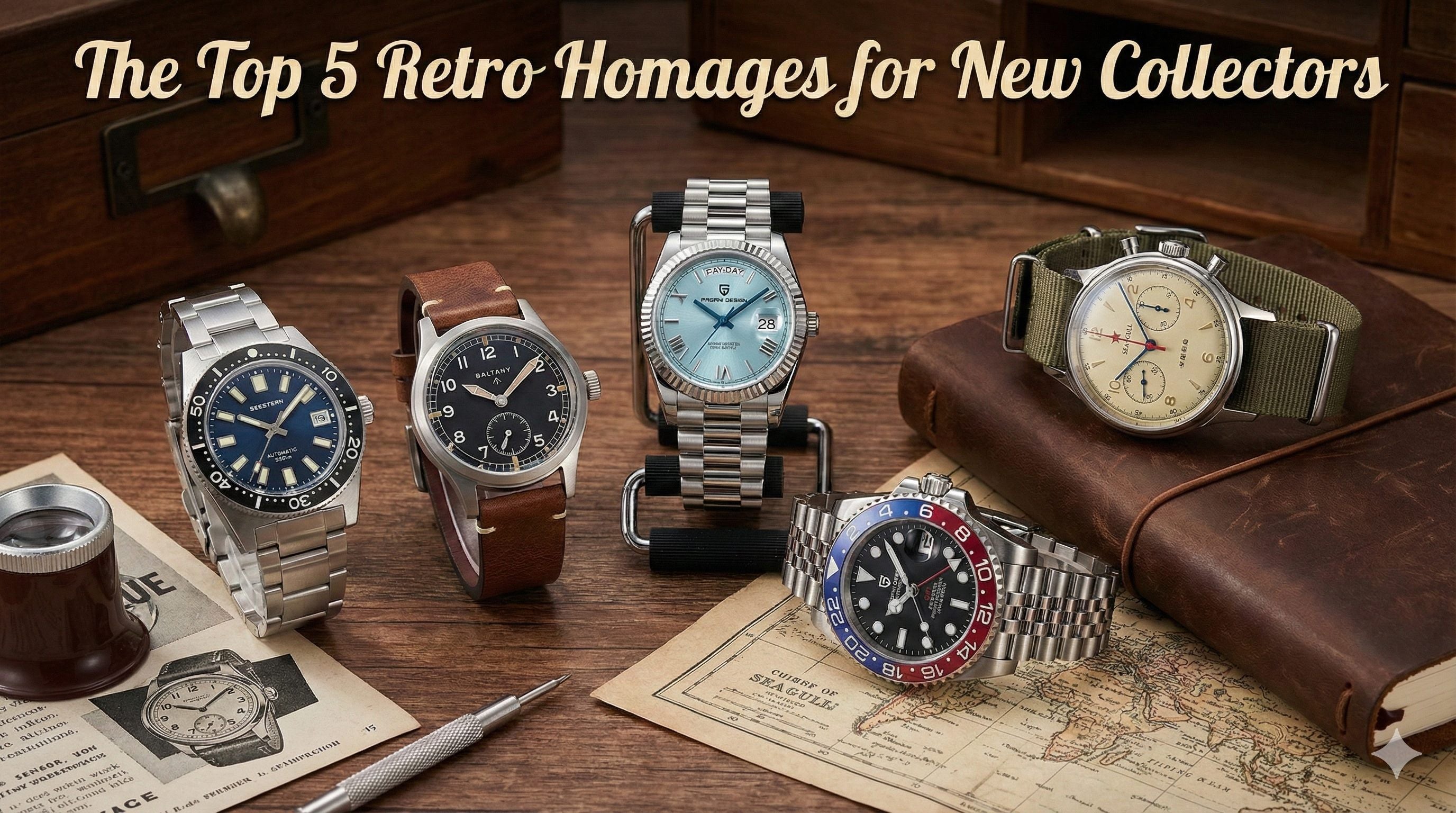
Example: Pagani Design or San Martin may produce watches that replicate Submariner style with sapphire, ceramic bezel, and NH35 movement — often 50–100x cheaper than Rolex, but with nearly identical performance for casual wear.
6. Quality vs Cost — The Practical View
- Microbrand: $100–$500 for sapphire, NH35/PT5000 movement, 200m water resistance, solid steel bracelet
- Luxury Entry-Level: $5,000+ for similar functional specifications but brand prestige, marketing, and dealer markups
Conclusion: Most enthusiasts wear watches for enjoyment, not investment. If your goal is daily reliable performance, durability, and style, microbrands often outperform luxury watches in value.
7. Who Should Buy What?
Choose a Microbrand If You:
- Want a mechanically robust watch at low cost
- Prefer unique or small-batch designs
- Care about specs and function more than brand recognition
- Want to experiment before committing to luxury
Choose a Luxury Watch If You:
- Seek prestige and status
- Are interested in resale or investment potential
- Appreciate in-house finishing, heritage, and meticulous craftsmanship
- Want access to authorized service networks
8. Case Study — Microbrand vs Luxury
|
Watch Type |
Movement |
Crystal |
Case |
Price |
Pros |
Cons |
|
Rolex Submariner |
In-house Swiss |
Sapphire |
904L steel |
$9,000+ |
Prestige, investment |
High cost, marketing markup |
|
Pagani Design PD-1661 |
NH35 |
Sapphire |
316L steel |
$120 |
Specs, value, style |
Brand not recognized, low resale |
|
San Martin SN004 |
NH35 |
Sapphire |
316L steel |
$150 |
Finishing, reliability |
Minimal resale value |
|
Omega Seamaster |
In-house Swiss |
Sapphire |
Stainless steel |
$5,000+ |
Prestige, finishing |
Cost, marketing markup |
Observation: Many microbrands match or exceed the functional specs of entry-level luxury watches, but prestige and resale remain luxury-exclusive.
9. Conclusion — What Are You Really Paying For?
Microbrand watches provide real mechanical value: functional movement, durable materials, and solid design. Luxury watches charge heavily for brand equity, exclusivity, and history.
In 2026, for most collectors and enthusiasts:
- Microbrands = best bang-for-buck
- Luxury = status, heritage, and potential investment
The key is to define your goal: daily wear, affordable style, and mechanical satisfaction? Microbrand. Prestige, legacy, and investment? Luxury.
10. Final Advice for Buyers
- Prioritize function over hype. Many microbrands outperform luxury watches on specs for daily use.
- Research the brand. Reviews, user forums, and verified suppliers help avoid QC issues.
- Consider long-term costs. Luxury watches may require costly servicing; NH35-powered watches are inexpensive to maintain.
- Enjoy your watch. At the end of the day, satisfaction comes from style, feel, and personal connection—not price tag.